

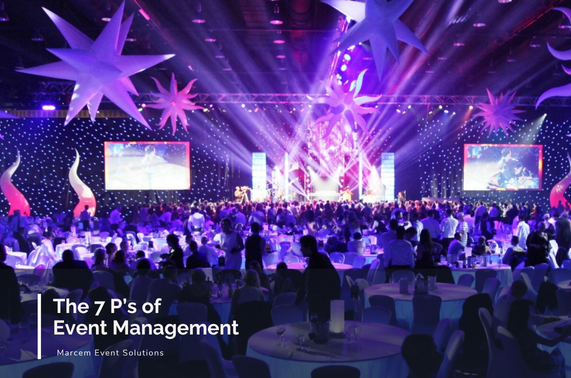
Most businesses assume event success depends on creativity or budget. In reality, it’s about alignment.
The 7 P’s framework acts as an operational blueprint used by top event management companies to ensure every moving part works in sync. Without this structure, even well-funded corporate events often fall short of their objectives.
Today’s audiences expect more than logistics. They expect experiences. And delivering that consistently requires a system, not guesswork.
The 07 P’s of Event Management (Explained)
1. The Product
The “product” is not just the event, it’s the experience you’re delivering.
In corporate environments, this could mean:
- A product launch designed to generate buzz
- A conference focused on thought leadership
- An internal event aimed at employee engagement
What most businesses miss is clarity. If the purpose of the event isn’t sharply defined, everything else becomes reactive instead of strategic.
Top event management companies start by asking:
What should attendees feel, learn, or do differently after this event?
2. The Price
Pricing in event management isn’t about how much you spend—it’s about how effectively you allocate.
A common mistake in corporate event planning is overspending on visible elements (like décor) while underinvesting in experience drivers (like flow, engagement, and content).
Professionals approach pricing as:
- Resource distribution
- ROI alignment
- Value engineering
A well-managed budget doesn’t cut costs, it amplifies impact.
Read: Do corporate events work?
3. The Place
The venue is no longer just a location; it’s a strategic asset.
The right “place” influences:
- Audience perception
- Accessibility
- Engagement levels
For example, a leadership conference held in a generic hall vs. a thoughtfully designed space creates entirely different impressions.
Experienced event management companies evaluate:
- Venue flow and movement
- Technical infrastructure
- Experience potential
Because in modern events, space is part of storytelling.
Learn: best venues to choose for corporate events in Karachi
4. The Promotion
Even the best event fails if the right people don’t show up.
Promotion today goes beyond invitations. It includes:
- Targeted audience segmentation
- Multi-channel outreach
- Pre-event engagement strategies
In high-level business event management, promotion is aligned with outcomes:
- Lead generation
- Brand positioning
- Stakeholder engagement
It’s not about reaching more people, it’s about reaching the right people.
5. The People
Behind every seamless event is a team that knows exactly what they’re doing.
This includes:
- Event planners
- On-ground staff
- Technical crews
- Vendor partners
But “people” also includes your audience.
Great event management companies design experiences around attendee behavior:
- How they enter
- How they interact
- How they remember
Because events are human experiences—not logistical checklists.
6. The Process
This is where most events succeed or fail.
Process includes:
- Planning timelines
- Vendor coordination
- Risk management
- Execution workflows
Without a defined process, even simple events become chaotic.
Professional event planning services rely on systems:
- Checklists
- Contingency planning
- Communication protocols
The smoother the process, the more effortless the event feels to attendees.
Learn: How to make corporate event successfull
7. The Physical Evidence
Once the event ends, what remains?
This includes:
- Visual impressions
- Brand recall
- Digital content (photos, videos)
- Audience memory
In experiential events, “physical evidence” is what turns a one-time event into a lasting brand experience.
This is why event production services focus heavily on:
- Visual identity
- Stage design
- Content capture
Because perception doesn’t end when the event does.
How Event Management Companies Use the 7 P’s Differently
The biggest difference between internal teams and professional event management companies is not creativity, it’s structure.
While many organizations approach events as one-off projects, professionals treat them as:
- Repeatable systems
- Measurable experiences
- Strategic investments
They don’t just execute, they optimize.
For example:
- Budget is tied to outcomes
- Venue is chosen for impact, not convenience
- Audience journey is mapped in advance
This level of depth is what transforms average corporate events into high-performing ones.
Where Most Corporate Events Go Wrong
Even well-planned events fail when the 7 P’s are misaligned.
Common issues include:
- A strong concept with poor execution
- High budget but weak audience targeting
- Great venue, but no engagement strategy
The problem isn’t effort, it’s fragmentation.
When each “P” is handled in isolation, the event loses cohesion.
That’s why experienced event management companies focus on integration, not just execution.
The Real Impact: Why Structure Drives Results
Events are often judged by how they look—but their true value lies in what they achieve.
Consider this:
- According to industry research, over 70% of businesses say live events are their most effective marketing channel for generating qualified leads.
- Additionally, more than 80% of attendees say in-person events increase their trust in a brand.
These numbers highlight one thing: events influence decisions.
But only when they’re executed with precision.
Without structure, events become expenses. With structure, they become assets.
How to Choose the Right Event Management Company
Not all event management companies operate at the same level.
If you’re planning a high-stakes corporate event, look beyond portfolios.
Key factors to evaluate:
1. Strategic Thinking
Do they understand business objectives—or just execution?
2. Process Clarity
Can they explain how they plan, manage, and deliver events?
3. Experience with Corporate Events
Have they handled a similar scale and complexity?
4. Vendor & Resource Network
Strong networks lead to smoother execution.
5. Attention to Detail
The smallest details often define the overall experience.
Choosing the right partner is not about cost—it’s about capability.
The Future of Event Management (2026 and Beyond)
The industry is evolving rapidly.
Key trends shaping the future:
- Hybrid and digitally integrated events
- Experience-first design over logistics-first planning
- Data-driven event strategies
- Personalized attendee journeys
Modern event management companies are no longer just planners—they are experience architects.
And as expectations continue to rise, structured frameworks like the 7 P’s will become even more critical.
Conclusion
Great events don’t happen by accident. They’re designed.
The 7 P’s of event management provide a framework that ensures every element—from strategy to execution—works together seamlessly.
For businesses investing in corporate events, this structure is the difference between simply hosting an event and creating something that delivers real, measurable impact.
FAQs
What are the 7 P’s of event management?
The 7 P’s include Product, Price, Place, Promotion, People, Process, and Physical Evidence. Together, they form a framework used by event management companies to plan and execute successful events.
Why are event management companies important for corporate events?
They bring structure, expertise, and execution systems that ensure events meet business objectives, rather than just logistical completion.
How do corporate events generate ROI?
Through lead generation, brand positioning, stakeholder engagement, and relationship building—especially when aligned with clear objectives and strategy.
What is the biggest mistake in event planning?
Focusing on individual elements (like venue or décor) without aligning all aspects of the event under a unified strategy.
How much does a corporate event typically cost?
Costs vary widely depending on scale, location, and objectives. However, professional planning ensures budgets are optimized for maximum impact.
When should you hire an event management company?
Ideally, as early as possible—during the planning stage—so strategy, budgeting, and execution are aligned from the start.
Sector-Specific Strategies
The best Event Management Companies create customized strategies based on your industry:
| Sector | Core Focus & Strategy |
| Tech & SaaS | Live coding demos, “Genius Bars” for tech support, and reliable Wi-Fi. |
| Luxury & Lifestyle | High-fashion stage design, sensory experiences (scents), and premium aesthetics. |
| Industrial & B2B | Curated networking zones, focused workshops, and ROI Tracking. |
Conclusion: From Launch to Legacy
A product launch is a high-risk, high-reward proposition; you only get one shot to make a first impression. From Venue Sourcing to final ROI Tracking, professional expertise is vital to solidifying your brand’s contribution to its industry.
Don’t leave your product’s destiny to fate. If you want your next launch to be the standout event of 2026, partner with professional Event Management Companies today.