Buffet vs. plated catering comes down to the type of event you are hosting, the experience you want guests to have, and how much variety or structure your meal requires. Buffet service gives guests more choice and works particularly well for larger gatherings, while plated catering offers a more formal dining experience with food served directly at the table.
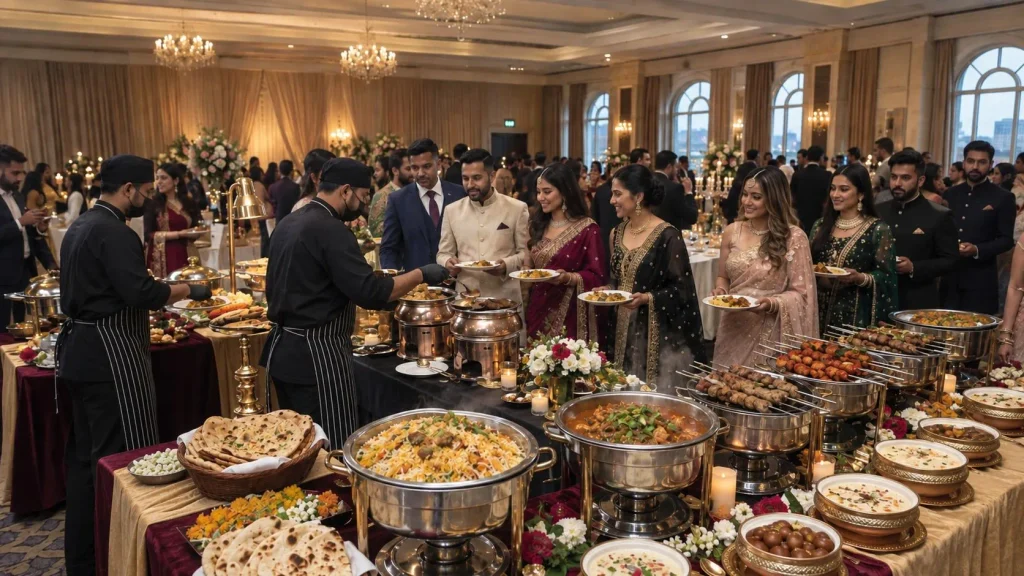
Neither option is automatically better. Weddings, corporate events, and large parties can benefit from either style, depending on the guest count, menu, venue layout, and level of formality.
The key is to compare how each service style affects menu variety, guest choice, service flow, space, and overall event experience before deciding.
Buffet vs Plated Catering: Quick Comparison
The simplest way to compare the two styles is to look at what each one offers during the meal. Buffet catering gives guests greater freedom to choose their food, while plated service provides a more structured experience.
| Factor | Buffet Catering | Plated Catering |
| Guest choice | High, with several dishes available | More limited to the selected menu |
| Menu variety | Usually easier to offer several choices | Usually more focused |
| Service style | Guests serve themselves or are assisted at stations | Staff serve courses directly at the table |
| Dining flow | Flexible and less structured | More organized and sequential |
| Event atmosphere | Social and relaxed | Formal and structured |
| Space | Requires suitable buffet or food-station space | Requires organized table service |
| Best suited to | Large gatherings, weddings and parties | Formal dinners and focused events |
The Main Difference
Buffet catering prioritizes choice and variety, while plated catering prioritizes structure and table service. The better option depends on which of these matters more for your event and guests.
What Is Buffet Catering?
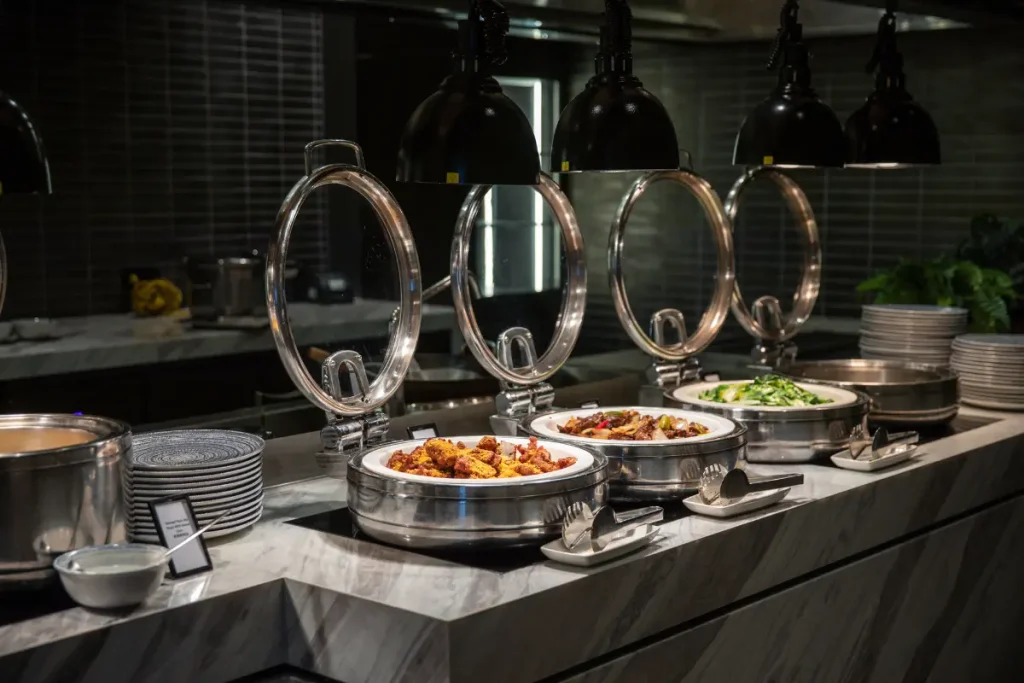
Buffet catering is a service style where prepared dishes are arranged at a buffet station. Guests can choose what they want and how much they would like to eat, either by serving themselves or with assistance from catering staff. For local events, buffet catering in Karachi can offer flexibility for different guest preferences.
It also gives hosts flexibility when planning the menu. Multiple starters, mains, sides, and desserts can be offered together, giving guests more choice within the same event.
Why Hosts Choose a Buffet
- More guest choice: Guests can select the dishes they prefer.
- Greater variety: Several food categories can be offered in one spread.
- Flexible dining: Guests can eat at their own pace.
- Good for larger gatherings: It works well for events with a broad mix of guests.
- Social atmosphere: Guests can move around the venue more freely.
Buffet service works especially well when food variety is an important part of the event. It can suit weddings, large parties, and informal corporate gatherings with diverse menu preferences.
The main consideration is space. Buffet stations should be positioned carefully to prevent congestion when many guests are dining at once.
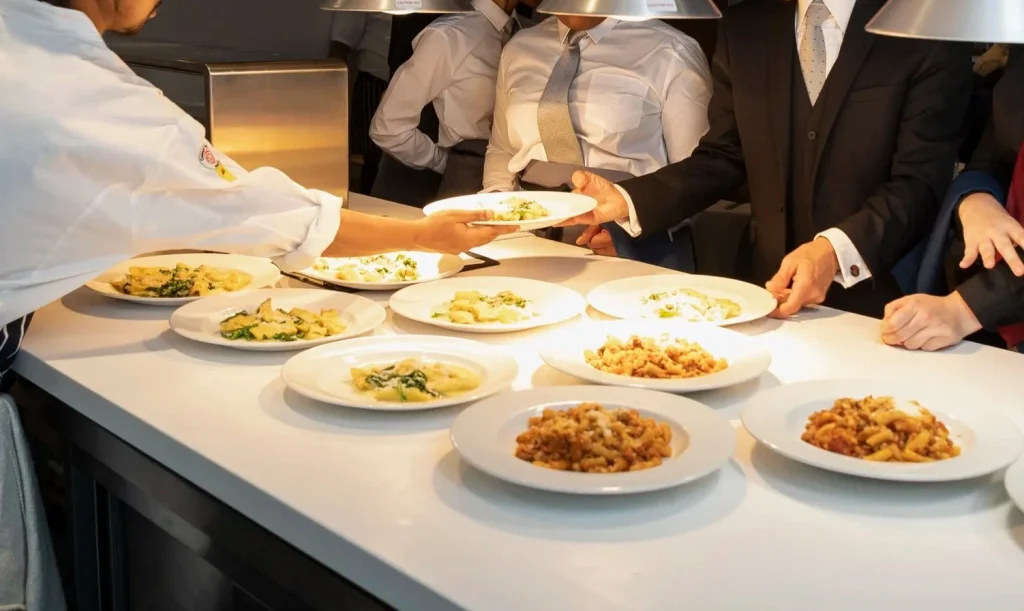
What Is Plated Catering?
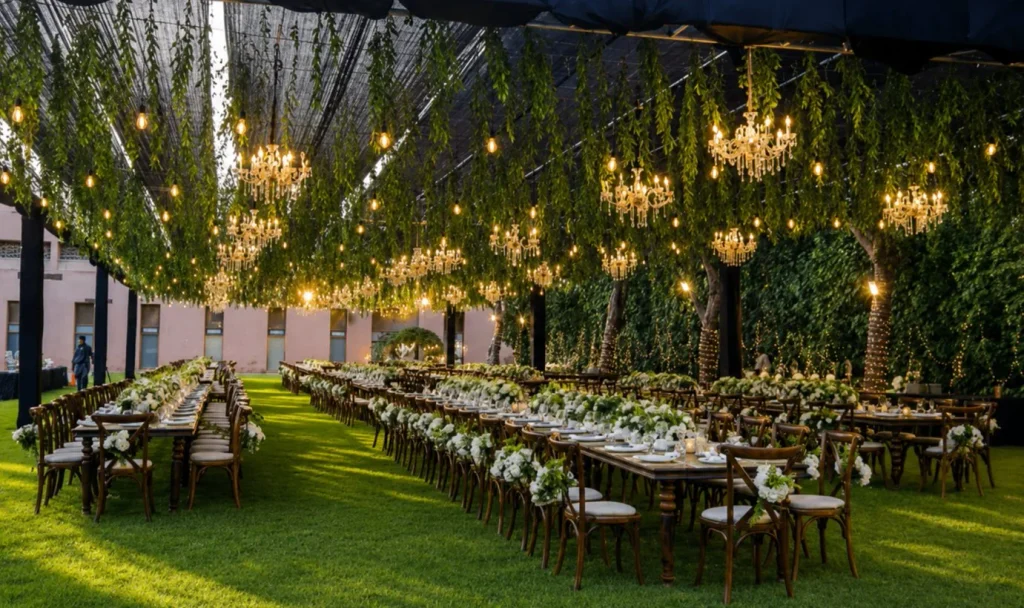
Plated catering is a table-service format where each guest receives a prepared meal at their seat. Instead of choosing from a buffet, guests are served a predetermined menu, usually in separate courses.
This creates a more organized dining experience, with starters, main courses, and desserts served according to a planned sequence.
Why Hosts Choose Plated Service
- Formal presentation: Each course is presented individually.
- Controlled portions: The catering team determines each serving.
- Structured timing: Courses can be coordinated with speeches or entertainment.
- Less guest movement: Guests remain seated while food is served.
- Consistent experience: Everyone follows the same planned menu.
Plated catering can work well for formal weddings, corporate dinners, award ceremonies, and events with a defined schedule.
The trade-off is less menu flexibility. Hosts need to consider guest preferences, dietary requirements, and portions in advance, while the venue needs enough staff for efficient table service.
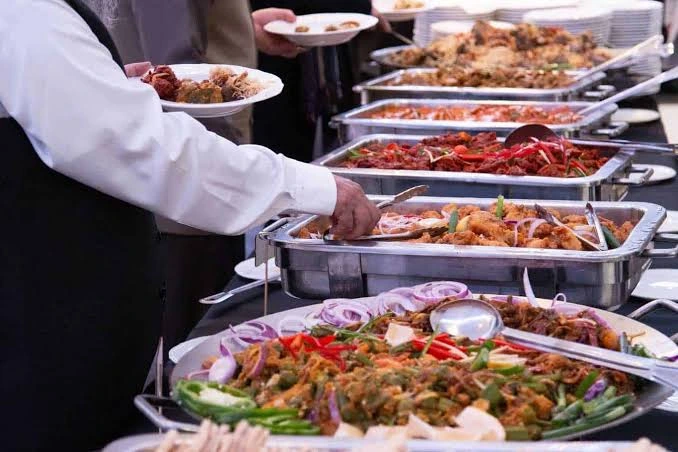
Buffet vs Plated Catering: Key Differences
The choice between buffet and plated catering affects more than how food reaches the table. It can influence guest movement, menu planning, staffing, timing, and the overall atmosphere of the event.
Guest Choice
Buffet: Guests can choose from several dishes and control their portions.
Plated: Guests receive the selected meal according to the menu decided by the host.
Menu Variety
Buffet: Makes it easier to offer several mains, sides, salads, and desserts in one spread.
Plated: Usually works with a more focused menu because each course must be prepared and served individually.
Service and Staffing
Buffet: Requires staff to manage food stations, replenish dishes, and assist guests when needed.
Plated: Requires servers to deliver and clear meals at each table, making service coordination more important.
Dining Experience
Buffet: Creates a more flexible and social dining environment.
Plated: Creates a more formal experience with guests remaining seated throughout the meal.
Event Timing
Buffet: Allows guests to approach the food at different times, depending on the setup.
Plated: Provides greater control over when each course is served, which can suit events with a fixed schedule.
Space Requirements
Buffet: Needs dedicated space for food stations and enough room for guests to move through the serving area.
Plated: Requires well-organized table layouts and sufficient space for servers to move between tables.
Bottom line: Choose a buffet when choice, variety, and flexible dining are priorities. Choose plated catering when formality, controlled timing, and table service matter more.
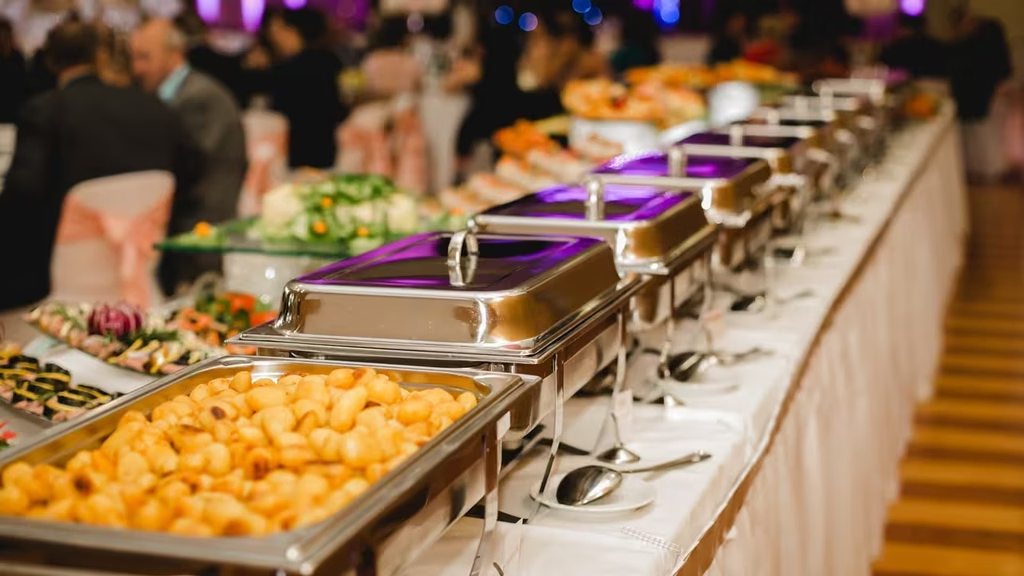
Buffet Catering: Pros and Cons
Buffet catering is often a practical choice for events with larger guest lists or varied food preferences. However, its suitability depends on the venue, guest profile, and level of service expected.
Advantages
- More variety: Several dishes can be offered at the same time.
- Greater flexibility: Guests choose their food and portions themselves.
- Suitable for large groups: A well-planned buffet can serve many guests efficiently.
- Social dining: Guests can interact and move around while selecting food.
- Easy menu customization: Different cuisines, sides, and dessert options can be included.
Potential Drawbacks
- Queue management: Popular dishes can create lines during peak serving times.
- Space requirements: Food stations need enough room for access and movement.
- Presentation can change: Dishes may need regular replenishment to keep the spread looking appealing.
- Guest movement: Guests leave their tables to collect food, which may not suit very formal events.
Best fit: Buffet catering is particularly suitable when menu variety, guest choice, and flexible dining are more important than formal table service.
Plated Catering: Pros and Cons
Plated catering creates a more structured dining experience, making it a strong option for formal occasions and events with a defined schedule. It can also make the meal feel more organized from the guest’s perspective.
Advantages
- Formal dining experience: Guests are served directly at their tables.
- Controlled portions: Each meal can be prepared according to a planned serving size.
- Predictable timing: Courses can be served at specific points during the event.
- Clean table setup: Guests do not need to leave their seats to collect food.
- Consistent presentation: Each guest receives the same planned course.
Potential Drawbacks
- Less variety: Guests generally have fewer dishes to choose from.
- Higher service coordination: Staff must deliver and clear meals across tables.
- Dietary requirements: Special meals may need to be planned separately.
- Less flexibility: Changing the menu or portions during service can be difficult.
- Timing matters: Delays in one course can affect the rest of the dining schedule.
Best fit: Plated catering is most suitable when formal service, controlled timing, and a structured guest experience are priorities.
Which Works Better for Different Events?
There is no single answer to buffet vs plated catering for every occasion. The right choice depends on the event format, guest count, venue, and dining experience you want to create.
Weddings
Buffet catering is often a strong choice for weddings because guests can select from a wider range of dishes and serve themselves according to their preferences. It also works well with the variety commonly expected at Pakistani wedding functions.
Plated catering can be a better fit for smaller or more formal wedding receptions where table service and controlled meal timing are priorities.
Corporate Events
For conferences, office gatherings, and networking events, the choice depends on the schedule.
- Buffet: Better when guests need flexibility between sessions or networking.
- Plated: Better for formal dinners, awards ceremonies, or events with a fixed dining schedule.
For corporate settings, the meal service should support the event agenda rather than interrupt it.
Large Parties
For birthdays, family gatherings, and other large celebrations, buffet catering generally offers greater flexibility. Guests can choose their preferred dishes and return for additional servings without requiring individual table service.
Plated service can still work for large parties when the host wants a more formal atmosphere and has sufficient service staff and table space.
Quick Recommendation
| Event Type | Usually Better | Why |
| Large wedding | Buffet | Variety and guest choice |
| Formal wedding dinner | Plated | Structured table service |
| Office gathering | Buffet | Flexible dining |
| Corporate dinner | Plated | Formal and scheduled |
| Large private party | Buffet | Easier guest movement |
| Formal celebration | Plated | More controlled experience |
Buffet or Sit-Down Dinner in Karachi: What Should You Choose?
When comparing buffet or sit-down dinner Karachi options, consider the venue, guest count, event formality, and the type of dining experience your guests expect.
Choose Buffet When:
- You are hosting a large wedding or family gathering.
- Guests have different food preferences.
- You want several Pakistani and international dishes.
- Guests need flexibility during the meal.
- The venue has enough space for buffet stations and guest movement.
Choose Plated When:
- The event has a formal or premium dining format.
- You want guests to remain seated during dinner.
- The meal needs to follow a specific schedule.
- The guest count allows for organized table service.
- Your menu is focused rather than built around a wide variety.
For Karachi events, venue layout and guest movement deserve particular attention. A buffet can work extremely well in a spacious venue, while plated service may be more practical where table arrangements and formal dining are central to the event.
Simple rule: For variety and flexibility, lean toward a buffet. For formality and controlled service, consider plated catering.
How to Choose the Best Catering Style for Your Event
The best catering style depends on what matters most for your event. Use these five factors to make the decision:
Guest Count
Large gatherings often benefit from buffet service, while smaller formal events can make better use of plated dining.
Event Formality
A relaxed celebration may suit a buffet, whereas a formal dinner, awards night, or executive gathering may favour plated service.
Menu Variety
Choose a buffet if offering several dishes and giving guests more choice is important. Plated service is better when you want a focused menu.
Venue Layout
Check whether the venue has enough space for food stations and guest movement. For plated service, consider table spacing and room for serving staff.
Event Schedule
If guests need flexibility around activities or networking, buffet service can be more convenient. If dinner needs to follow a fixed sequence, plated catering provides greater control.
Decision rule: Prioritize choice and variety for a buffet, or structure and table service for a plated meal. This simple catering style comparison can help narrow down the right option before discussing menus and catering packages.
Practical Decision Checklist
Before choosing between buffet and plated catering, review these points:
- Guest count: How many people will be served?
- Guest preferences: Do you need a wide selection of dishes?
- Event type: Is it a wedding, corporate gathering, or private celebration?
- Formality: Should dinner feel relaxed or more structured?
- Venue: Is there enough room for buffet stations and guest movement?
- Service staff: Can the event support the staffing required for table service?
- Menu: Would a broad selection or a focused set of courses work better?
- Schedule: Do speeches, entertainment, or networking require flexible dining times?
- Dietary needs: Will guests require vegetarian, allergy-friendly, or special meals?
- Budget: Compare the complete service setup rather than looking only at food cost.
For weddings, compare your options with the expected menu, guest flow, and service requirements in mind. For business gatherings, catering for office events should also account for meeting schedules and available dining time.
If you are still deciding, reviewing suitable catering packages can help you compare menu options and service formats before making a final choice.
Which Catering Style Is Better for Your Event?
Neither buffet nor plated catering is universally better. The right choice depends on your guest count, menu preferences, venue, event format, and desired level of formality.
For weddings, large celebrations, and events where variety matters, buffet service is often the more flexible option. If you want formal table service and a controlled dining sequence, plated catering may be the better fit.
If you are planning an event in Karachi, buffet catering in Karachi can give you the flexibility to offer multiple dishes while accommodating different guest preferences.
Ready to Choose Your Catering Style?
Share your guest count, venue, menu preferences, and event type with the catering team. They can help you determine whether buffet or plated service fits your requirements and recommend a setup that works with your event.
Frequently Asked Questions
What is the difference between buffet and plated catering?
Buffet catering lets guests choose their food from a shared spread, while plated catering serves a predetermined meal directly to each guest at the table. The main difference is guest choice versus structured table service.
Is buffet or plated catering better for a wedding?
Buffet catering often works well for weddings because it offers greater variety and guest choice. Plated service is better when a formal dining experience is preferred. Your guest count, venue layout, and wedding format should guide the final choice.
Is buffet or sit-down dinner better for a large event?
A buffet is generally more flexible for large events because guests can select their preferred dishes. A sit-down dinner suits events where formal service and controlled timing matter more. Buffet service can also make it easier to accommodate different food preferences.
Which catering style is better for corporate events?
Buffet catering suits networking events and flexible schedules, while plated catering can work better for formal corporate dinners, awards ceremonies, and scheduled meals. The event agenda should be a key factor when deciding between the two.
Is buffet catering cheaper than plated catering?
Not necessarily. The total cost depends on the menu, staffing, guest count, equipment, service level, and venue requirements rather than the catering style alone. Comparing the complete service package gives a more accurate picture of the cost.
How many dishes should a buffet have for an event?
There is no fixed number. The menu should provide enough variety for the guest count while considering the event type, cuisine, budget, and available serving space. A well-planned menu is usually more effective than simply offering a large number of dishes.
Does plated catering require more staff than a buffet?
Plated catering generally requires more service coordination because staff must deliver and clear meals at individual tables, while buffet staff primarily manage stations and replenishment. The required staffing level can vary depending on guest count and service standards.
How do I choose the best catering style for my event?
Consider your guest count, menu variety, venue layout, event formality, schedule, dietary needs, and budget. These factors will usually point toward either buffet or plated service. If several factors compete, prioritize the dining experience you want guests to have.