

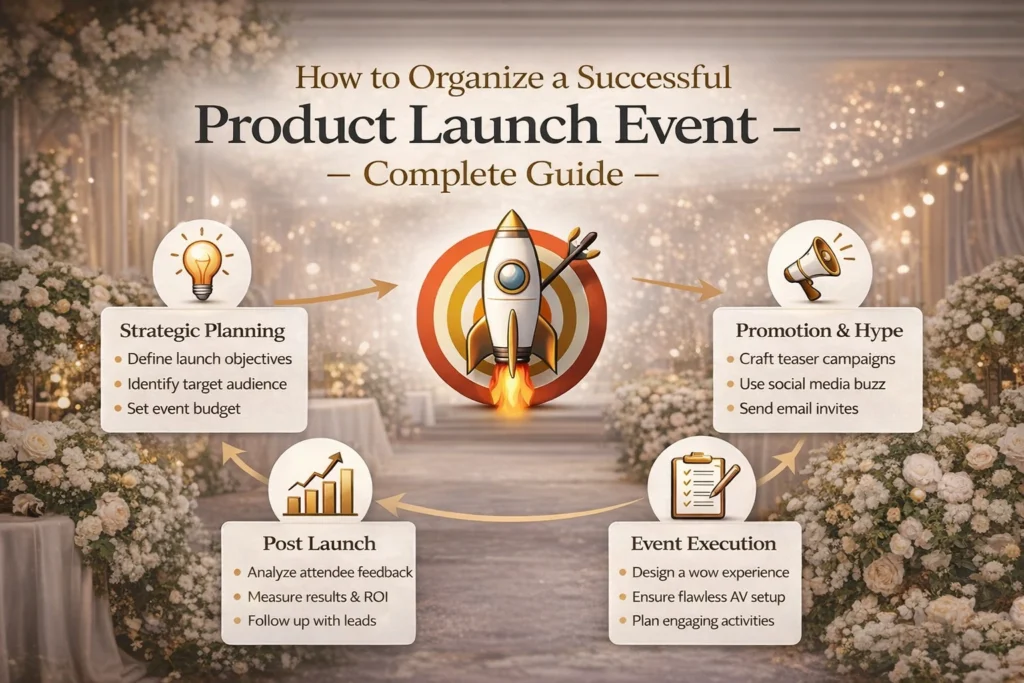
Key Takeaways
- A product launch event is not a party; it’s a revenue, reputation, and positioning exercise.
- Successful launches are built on stakeholder alignment, disciplined budgeting, and atmospheric design.
- Your event must clearly answer one core question: Why should the market care, right now?
- The biggest failures don’t come from bad décor; they come from poor logistics, unclear messaging, and weak follow-through.
- Post-event analytics matter as much as the event itself. If you don’t measure impact, you can’t justify ROI.
We’ve worked on product launches where a single evening decided the fate of a multimillion-dollar rollout.

No exaggeration.
When a product launch event goes right, it creates momentum that sales teams ride for months. When it goes wrong, the market remembers, sometimes longer than the product itself survives.
A product launch event is not about glamour. It’s about control.
- Control of narrative
- Control of Sales
- Control of Audience
- Control of perception.
- Control of timing
In my experience working with executive teams, founders, and global brands, I’ve often found that leadership underestimates one thing: the significant influence of a live experience on buying confidence.
Your product might be brilliant. But if the launch feels disorganized, confusing, or underwhelming, people quietly question everything else.
This guide is written through the lens of a senior event designer and corporate planner with 15 years in the field — not theory or trends, but what actually works when pressure is real and expectations are unforgiving.
The Strategic Framework: How Do You Plan a Product Launch Event Step by Step?
Phase 1: What Is the Real Objective of Your Product Launch?
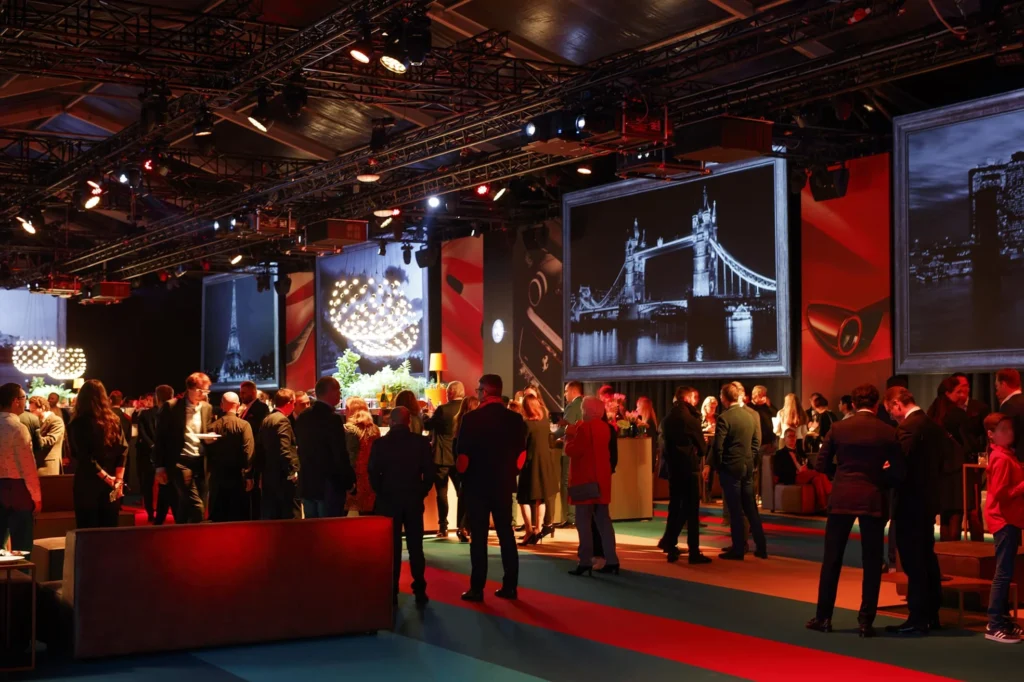
Before venues, before vendors, before stage design, you must answer this:
What decision should attendees make after this event?
Is it:
- Media coverage?
- Distributor confidence?
- Direct sales?
- Investor reassurance?
- Market repositioning?
We’ve seen beautifully executed launches fail because the objective was fuzzy. Everyone worked hard. Nobody worked in alignment.
Pro Tip (Insider Insight):
If your internal leadership team can’t describe the event goal in one sentence, stop planning. You’re about to waste budget.
Phase 2: Who Are You Designing This Experience For?
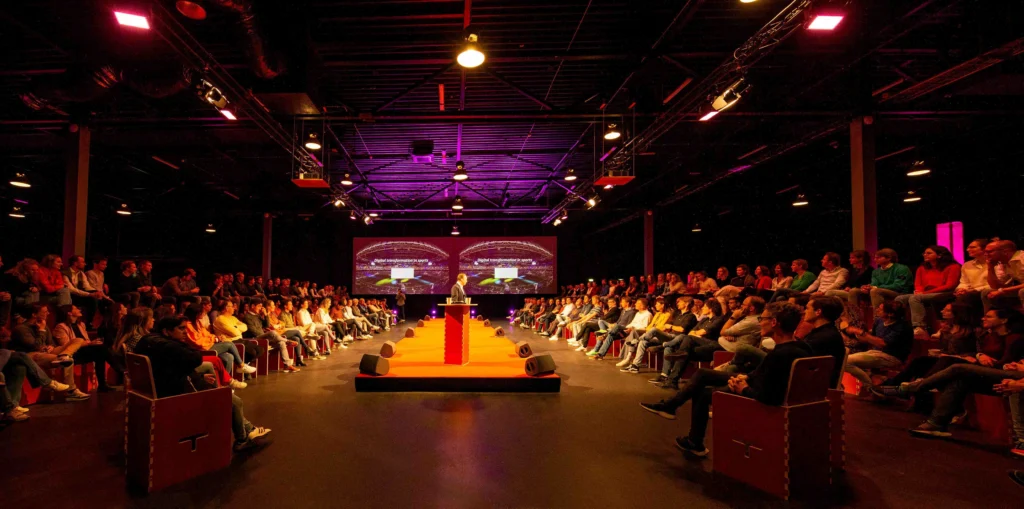
Not “everyone.”
A launch designed for:
- Specific audience
- Business people
- General Public
- Internal Launch
- Shareholders or Management, etc.
Each audience processes value differently.
In our experience with regional and global launches, the strongest events choose one primary audience and let everyone else be secondary.
Ask yourself:
- What does this audience already believe?
- What doubts do they carry?
- What proof do they need to feel safe backing this product?
That’s stakeholder alignment, and it drives everything from content to catering.
Pro Tip:
Never mix internal morale-building with external market messaging on the same stage. It confuses tone and weakens credibility. When you hire a professional event management company, you should always brief them accurately on the agenda of the product launch, including the audience, scope, and product/service. Etc.
Phase 3: When Is the Right Time to Launch?
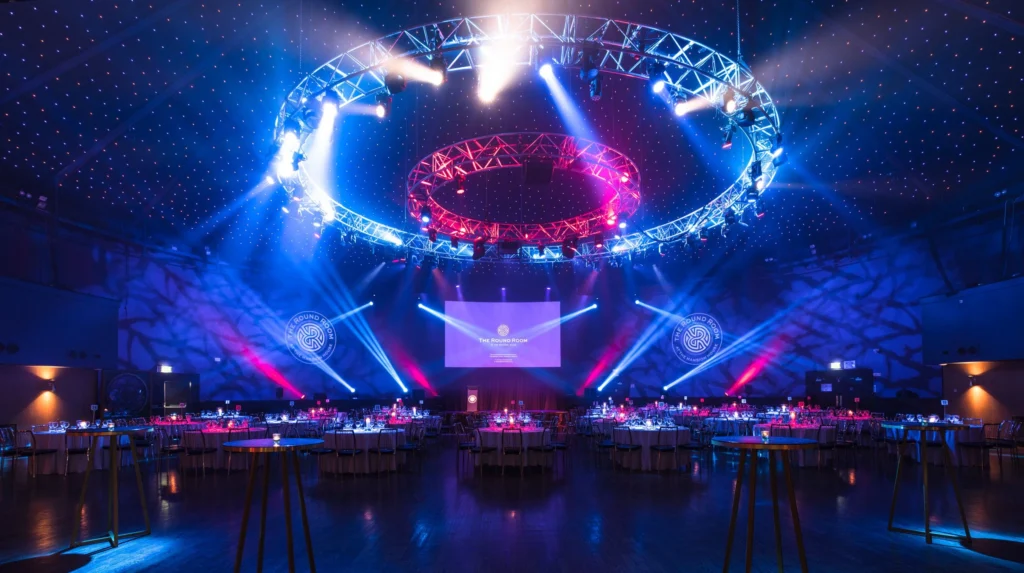
Timing kills more launches than budget cuts. SERIOUSLY!
Consider:
- Industry calendars
- Season
- Competitor announcements
- Fiscal cycles
- Sales readiness
- Media bandwidth
We often found that teams rush launches because the product is “ready,” while the market is not.
Pro Tip:
If your sales team hasn’t rehearsed the product narrative at least 2-3 times before the event, delay the launch. The event should amplify confidence. not expose gaps. In our experience, training should start 1-2 weeks before the launch if it’s a big-budget one
🎯 Product Launch Quick Game
1. What is the most important goal of a product launch event?
- Creating buzz and excitement
- Inviting maximum guests
- Serving great food
- Decoration only
2. Which element creates the strongest first impression at a launch event?
- Venue and stage design
- Social media posts
- Email invitations
- Gift hampers
3. Why is guest experience critical in a product launch?
- It builds brand recall
- It increases word of mouth
- It supports future sales
- All of the above
4. Which factor makes a product launch truly successful?
- Strategic planning
- Professional execution
- Brand storytelling
- All of the above
The Designer’s Eye: How Do You Create the Right Atmosphere for a Product Launch?
What Is Atmospheric Design and Why Does It Matter?
Atmospheric design is the invisible layer that makes people feel something before they understand anything.
It includes:
- Lighting temperature
- Spatial flow
- Sound design
- Stage proportions
- Brand restraint (yes, restraint)
In high-level launches we’ve led, the most effective designs weren’t loud. They were intentional.
Pro Tip:
If your product is innovative or new to the market, the design should be calm, precise, and welcoming. Let the product feel disruptive, not the environment. Your chosen vendor or event management company should know how to showcase your product through the event #fabrication #theme #brand mentioning, etc.
How Do You Design a Stage That Commands Authority?
Stages are not décor. They are psychological platforms.
Key considerations:
- Speaker height vs audience eye line
- Distance between the presenter and the product
- Screen size relative to room depth
- Lighting angles that flatter faces (this matters more than people admit)
We’ve seen leadership lose credibility simply because the stage made them look small.
Pro Tip:
Never let a stage designer dictate speaker positioning without understanding corporate hierarchy and messaging order.
How Much Branding Is Too Much Branding?
More logos do not equal more recall.
In fact, excessive branding signals insecurity.
Strong brands:
- Use whitespace
- Repeat one key visual idea
- Allow the product to breathe
Pro Tip:
If attendees photograph your backdrop more than your product, you’ve misallocated visual priority. Your product should be the main highlight; everything around the event should focus on the product/service mainly.
The Planner’s Spreadsheet: How Do You Control Budget, Vendors, and Risk?
How Do You Build a Product Launch Budget That Actually Holds?
Start with non-negotiables:
- Venue
- AV & production
- Content development
- Fabrication/Branding
- Security & compliance
- Host/Master of Ceremonies
- F&B (Food and Beverages minimums)
Then build buffers. Always.
Industry standard?
Keep a 10–15% contingency budget for corporate launches.
In our experience, events don’t go over budget — they go under-planned.
Pro Tip:
Lock AV early. Late changes in production are the fastest way to burn money quietly. Event organizing preparations should start at least 2 days before the launch. This helps get things done smoothly and covers any mishaps that could take place.
How Do You Calculate F&B Minimums Without Overspending?
Food is emotional, and expensive.
Consider:
- Event duration
- Audience type
- Alcohol strategy (If needed)
- Cultural expectations
- Service speed
Corporate guests remember:
- Cold food
- Long queues
- Empty coffee/tea stations
They rarely remember exotic catering menus.
Pro Tip:
Spend on service efficiency before menu complexity. A simple dish served flawlessly beats luxury served late. Clients and potential buyers at your product launch event could be surprisingly impressed by the food and beverages you serve. Its show of initiative and care. Which will inadvertently help sell your product. Keep in product launches detailing matters the most
Vendor Procurement: How Do You Choose the Right Partners?
Price is not the same as cost.
When selecting vendors:
- Ask about failure scenarios
- Request backup plans
- Review crew experience, not just portfolios
- Demand technical rehearsals
I’ve replaced cheaper vendors mid-project more times than I care to count. It always costs more in the end.
Pro Tip:
Any vendor who resists rehearsals is not a partner; they’re a risk. You need to hire the right vendor or event management company that has a history of successfully executing corporate events. A team that can stick by your event from beginning to end, in case of any mishap that could happen, can be diverted.
Content & Run of Show: What Actually Happens on Stage?
How Long Should a Product Launch Event Be?
Shorter than your leadership wants. Longer than marketing expects.
Ideal window:
- 60–160 minutes for core programming
- Optional networking before or after
Attention drops fast after the 45-minute mark unless pacing is tight.
Pro Tip:
If a speech doesn’t move the product story forward, cut it. Titles don’t justify airtime. You must hire a renowned or professional host/MC for your product launch who doesn’t just help sell your product, but actually keeps the audience engaged throughout the event from start to finish. A host should be your best investment, so don’t back out on this
How Do You Script a Run of Show That Feels Natural?
A strong run of show balances:
- Energy
- Information
- Emotional peaks
Think in acts, not agendas.
I’ve often found that rehearsed spontaneity beats rigid scripting. Leave room for human moments, but never for confusion.
Pro Tip:
Always rehearse transitions. Awkward handovers erode perceived professionalism faster than technical glitches.
Measurement & Post-Event Analytics: How Do You Prove ROI?
What Metrics Actually Matter After a Product Launch?
Vanity metrics are easy. Meaningful metrics take discipline.
Track:
- Qualified leads
- Media sentiment
- Sales velocity post-event
- Stakeholder feedback
- Content reuse value
The event doesn’t end when the lights go off. That’s when analysis begins.
Pro Tip:
Debrief within 72 hours. Memory fades quickly, and excuses grow fast. Don’t just sit idle after your product launch event. Market it on news, social media, newspapers, and ads if you have a budget. You need to make the most out of your investment so that your ROI increases over time.
Mini Checklist: Product Launch Event Essentials
✅ Product Launch Event Planning Checklist
Use this checklist to ensure your product launch is planned professionally and executed flawlessly.
✔ Pre-Event Planning Essentials
- Clear event objective defined (in one sentence)
- Primary target audience clearly identified
- Stakeholder alignment confirmed (internal & external teams)
✔ Budget & Logistics
- Event budget approved with contingency buffer
- Venue and AV production are locked well in advance
✔ Execution & Rehearsals
- Full rehearsals scheduled (technical & speaker run-throughs)
- Risk assessment and safety protocols reviewed
✔ Post-Event Strategy
- Post-event analytics and ROI tracking plan prepared
⭐ Pro Tip
A successful product launch isn’t about checking boxes —
It’s about clarity, coordination, and controlled execution.
Questions Asked by People
How far in advance should I plan a product launch event?
Ideally, 8–12 weeks for mid-scale corporate launches. Large-scale or international events may require 4–6 months.
Should I hire a professional event planner for a product launch?
If the launch impacts revenue, brand reputation, or investor confidence — yes. Internal teams rarely have the time or neutrality required.
What’s the biggest mistake companies make with product launches?
Trying to impress everyone instead of convincing the right people.
Are hybrid or virtual product launches still effective?
They can be, but only if designed intentionally. Streaming a physical event without adapting content usually weakens engagement.
Final Thought:
A successful product launch event doesn’t feel rushed.
It doesn’t feel loud.
And it certainly doesn’t feel accidental.
It feels inevitable, like this product was always meant to arrive exactly this way.
That level of confidence doesn’t come from trends or templates. It comes from experience, discipline, and respect for the details most people never notice.