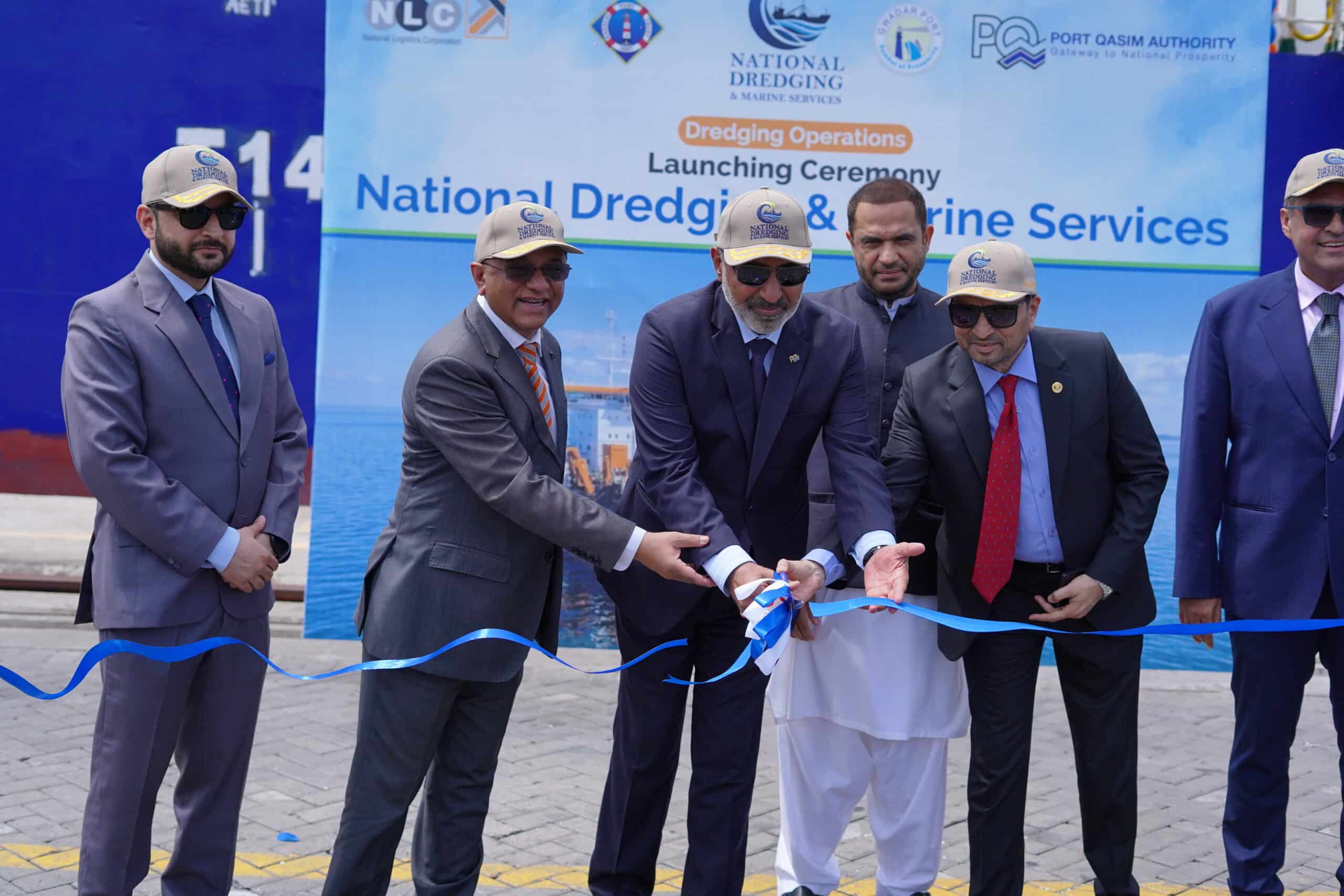
In 2026, Pakistan closed a gap in its maritime infrastructure that had stood since 1980. National Dredging & Marine Services (NDMS) formally commenced capital dredging operations at Port Qasim, marking the first time in over four decades that the country carried out this work through its own capability rather than outsourcing it to foreign contractors. The moment carried real institutional weight: a joint venture between four major maritime bodies, a federal minister in attendance, and senior officials from across Pakistan’s port authorities in the room.
This is the story of what NDMS is, why the Port Qasim launch matters, and why events of this scale where infrastructure policy meets public ceremony demand a different level of production discipline than a typical corporate function.
Project Overview
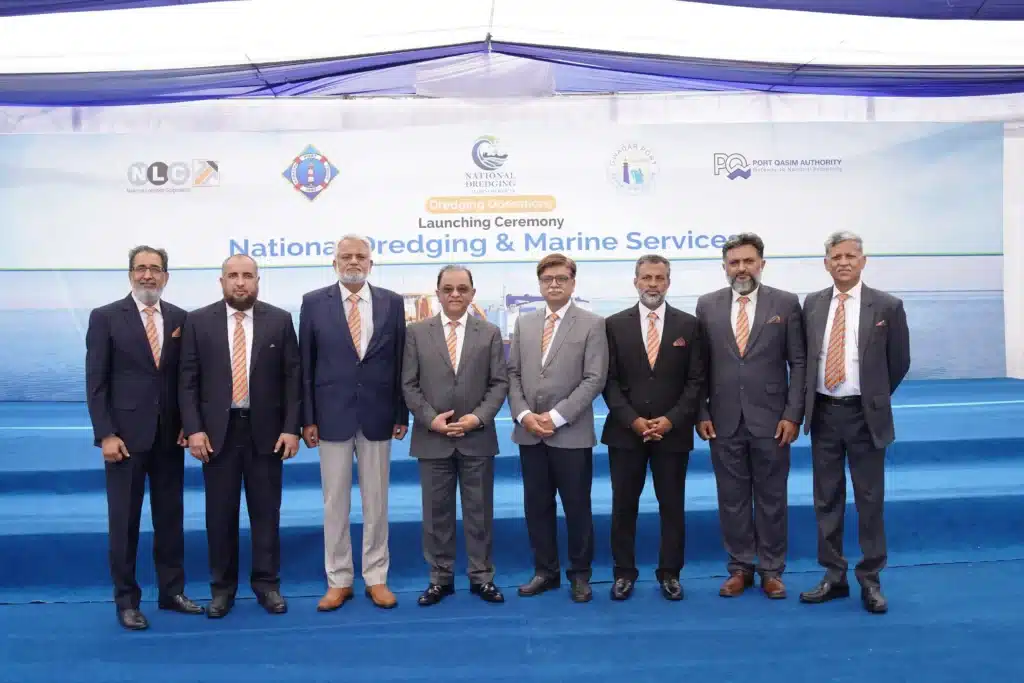
Entity: National Dredging & Marine Services (NDMS) Milestone: Commencement of capital dredging operations Location: Port Qasim, Karachi Stakeholders: National Logistics Corporation (NLC), Karachi Port Trust (KPT), Port Qasim Authority (PQA), Gwadar Port Authority (GPA)
NDMS is a joint initiative of these four institutions, formed to build Pakistan’s first indigenous capital-dredging capability. Public reporting confirms NDMS commenced dredging operations at Port Qasim in mid-2026, and separately signed a dredging agreement with PQA at a ceremony held at NLC headquarters, attended by Federal Minister for Maritime Affairs Muhammad Junaid Anwar Chaudhry along with senior officials from PQA, KPT, GPA, and the NDMS board.
The NDMS Dredging Operations Launch
Dredging is unglamorous, technical, and essential. Without it, ports silt up, channels narrow, and larger vessels simply cannot call. Pakistan had not carried out capital dredging at its own ports since 1980; every subsequent project had to be outsourced to foreign contractors, at real cost to the country’s foreign exchange reserves.
NDMS was set up specifically to close that gap. Its formation brought together four institutions that don’t typically share a single operational mandate: a logistics corporation, two port authorities, and a maritime trust. The commencement of dredging operations at Port Qasim was the first tangible proof that the joint venture could deliver, not just announce.
Why the Ceremony Mattered
Events built around infrastructure milestones carry a different kind of weight than product launches or brand activations. There’s no consumer audience to excite the room is built from officials, board members, and a minister whose presence signals that the government considers the milestone significant enough to attend in person. The event’s job isn’t to generate enthusiasm; it’s to mark, formally and credibly, that a national capability gap has been closed.
That distinction shapes everything about how such an event has to be produced, from protocol sequencing to the visual language on stage.
Understanding NDMS
NDMS (National Dredging & Marine Services) is Pakistan’s first state-backed national dredging company. It exists to provide indigenous, cost-effective dredging and marine services at Pakistani ports, starting with Port Qasim, with officials indicating an intent to extend the model to other ports, including Gwadar, over time. Its stated purpose is threefold: reduce dependence on foreign dredging contractors, save foreign exchange previously spent on outsourced work, and maintain navigational depth so ports can accommodate larger vessels and higher cargo volumes.
NLC, KPT, PQA and GPA: The Institutional Context
NDMS is not a single-owner company; it is a joint initiative of four institutions, each bringing a different mandate to the table:
- National Logistics Corporation (NLC) is one of the founding stakeholders; NLC headquarters hosted the dredging agreement signing with PQA, and NDMS’s registered office is housed within NLC’s headquarters complex on Mai Kolachi Road, Karachi. In NLC’s own account of its logistics initiatives, NDMS is described as one of the corporation’s most significant undertakings Pakistan’s first indigenous dredging company, already delivering cost savings and foreign exchange conservation while building an integral fleet that includes a large trailing suction hopper dredger and supporting vessels, with the initiative framed as strengthening maritime self-reliance and supporting long-term development across Gwadar, Karachi, and Port Qasim.
- Karachi Port Trust (KPT) is a founding stakeholder, represented at senior level during the agreement ceremony.
- Port Qasim Authority (PQA) the direct site authority for the dredging operations and the counterparty on the signed agreement.
- Gwadar Port Authority (GPA), a founding stakeholder, relevant to NDMS’s stated plans to extend indigenous dredging capability beyond Port Qasim in the future.
For an event built around a milestone like this, the audience is never a single client’s guest list; it’s four institutions’ worth of protocol, hierarchy, and stakeholder expectations, all needing to be represented and respected in the same room.
NLC’s Role in the Signing Ceremony
The dredging agreement between NDMS and Port Qasim Authority was signed at NLC headquarters rather than at Port Qasim itself, a detail that reflects NLC’s structural position at the center of the NDMS venture, not just its role as one of four stakeholders. NDMS’s registered office sits inside NLC’s own headquarters complex on Mai Kolachi Road, Sultanabad, Karachi, with a sub-office at NLC’s Rawalpindi headquarters on Harding Road. Federal Minister for Maritime Affairs Muhammad Junaid Anwar Chaudhry attended as chief guest, joined by senior officials from PQA, KPT, and GPA, and members of the NDMS board.
For NLC, the significance goes beyond hosting. Its own account of its logistics footprint places NDMS alongside its dry ports at Sost, Thokar Niaz Baig, Jia Bagga, Quetta, and Hyderabad, and its Karachi terminals at Sultanabad and Landhi, as part of a broader push to build indigenous logistics and maritime capability rather than rely on imported services. NDMS is described as already delivering cost savings and building out a fleet that includes a large trailing suction hopper dredger, positioning it as one of the more tangible outcomes of NLC’s wider infrastructure ambitions.
The Port Qasim Environment
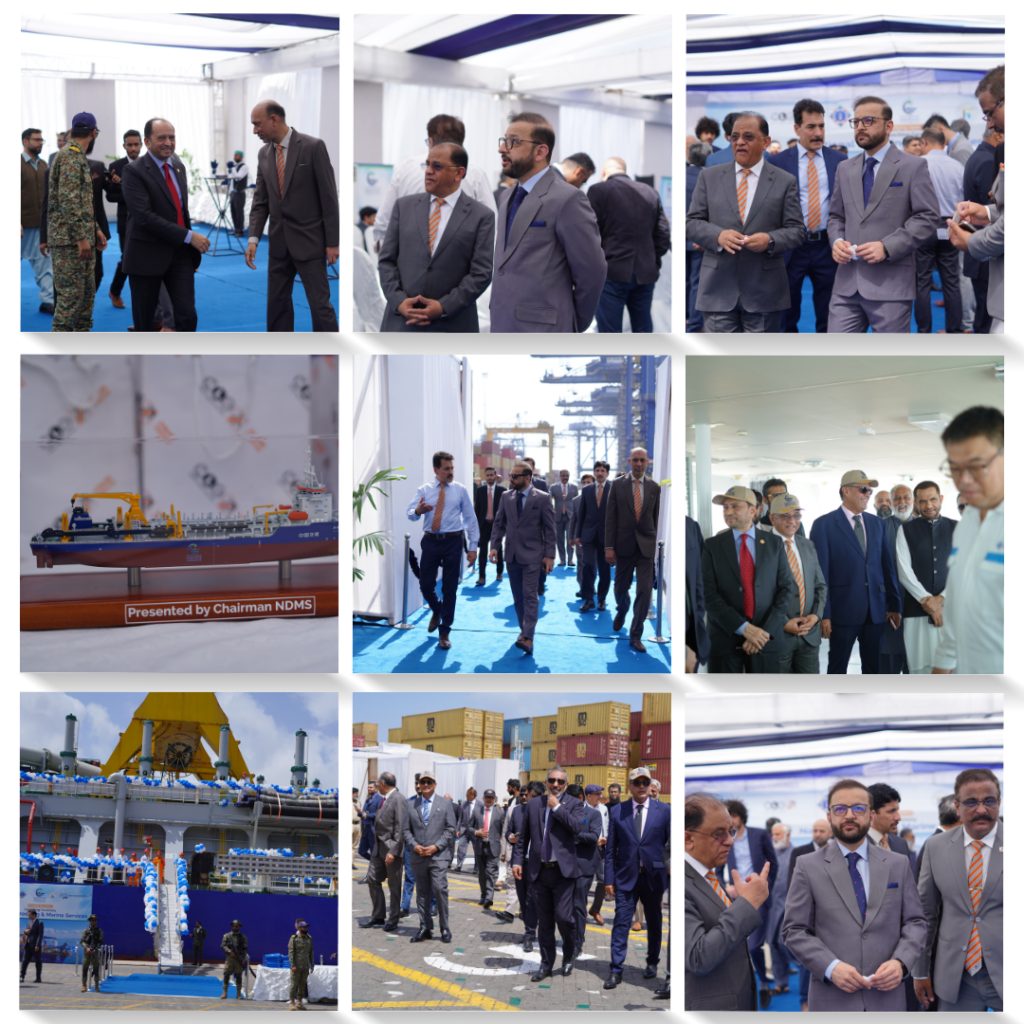
Port Qasim is one of Pakistan’s two major deep-sea ports and has separately been recognized as the world’s ninth most-improved container port, with officials describing plans for it to generate a substantial share of the country’s broader trade revenue ambitions. It is an active, working port environment, which means any event held there, or built around its milestones, has to be planned around operational realities: restricted access, security protocols, and a setting that is functional rather than purpose-built for events.
Where Things Stand Now
As of mid-2026, the dredging story at Port Qasim has moved beyond the initial launch. As part of the National Dredging Plan, dredging at Port Qasim has been completed, while work to enhance dredging capacity at other ports has also been expedited, with a broader multimodal logistics network connecting Karachi Port, Port Qasim, and the Pipri railway yard now under development.
Separately, Port Qasim Authority confirmed in July 2026 that the first phase of a $250 million dredging project has begun, and that upon completion, modern large vessels with an 18-metre draft will be able to berth at the port, part of a wider $2 billion redevelopment of Port Qasim that also includes a new railway link for Reko Diq mineral exports and an expanded logistics park. Chairman Port Qasim Authority, Rear Admiral (retd) Moazzam Ilyas, noted that the port began in 1980 with a single berth and has since grown to eighteen, with channel depth set to increase from the current 13.5 metres to 15 metres by 2028, and eventually to 18 metres.
Taken together, the picture is one of sustained momentum rather than a single isolated ceremony: NDMS’s initial dredging commencement in May 2026 sits inside a much larger, multi-year infrastructure push at Port Qasim involving international investment from the UAE, Türkiye, Qatar, and China under a 30-year master plan.
Executive and Institutional Guest Experience
Events involving a federal minister and senior officials from multiple state institutions carry requirements a standard corporate event doesn’t: security coordination beyond the ordinary, formal protocol sequencing for arrivals and speaking order, and hospitality arrangements sensitive to institutional hierarchy rather than a single client’s preferences. Getting this wrong isn’t a minor misstep; it’s a visible, public one, in a room where every attendee represents an institution, not just themselves.
The Significance of the Launch
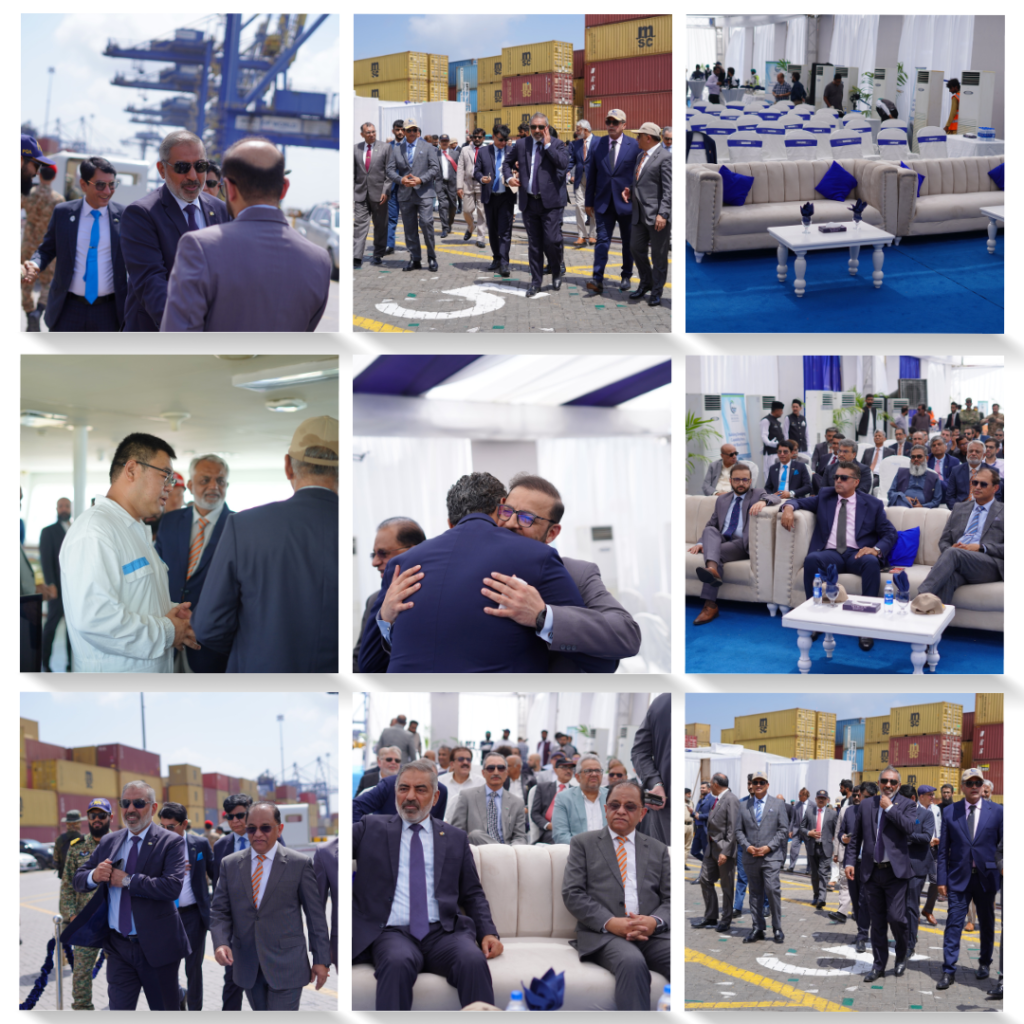
The NDMS dredging launch represents the practical end of a decades-long capability gap. Its significance is institutional and economic rather than ceremonial: it signals that Pakistan can now maintain its own ports without routing that work and the foreign exchange it costs through international contractors. Events that mark this kind of milestone function as a public, verifiable record that the commitment behind the announcement has translated into action.
Corporate Event Management for Institutional Events
Institutional events differ from typical corporate functions in several concrete ways: multiple stakeholder sign-off rather than a single decision-maker, protocol-driven seating and sequencing rather than design-led seating, security and access requirements tied to official attendees, and a visual language built around credibility rather than celebration. Managing this kind of event requires the same production discipline as any corporate event, applied to a room where the margin for error on protocol, on hierarchy, on tone is considerably smaller.
MARCEM’s corporate event work is built around exactly this kind of discipline, coordinating multiple stakeholders, managing protocol-sensitive environments, and producing events where the substance of the occasion has to come through clearly, without the production getting in the way.
Conclusion
The NDMS Port Qasim dredging launch marks a genuine turning point in Pakistan’s maritime infrastructure a joint effort by four institutions to close a capability gap that had persisted since 1980. It’s a useful reference point for what institutional-scale events actually demand: not spectacle, but precision, protocol awareness, and the judgment to let a genuinely significant moment speak for itself.
Related MARCEM Services
FAQs
What was the NDMS Dredging Operations launch at Port Qasim?
NDMS, a joint initiative of NLC, KPT, PQA, and GPA, formally commenced capital dredging operations at Port Qasim in 2026, ending a period since 1980 in which Pakistan lacked indigenous capital-dredging capability.
What is National Dredging & Marine Services?
Pakistan’s first state-backed national dredging company, established to provide indigenous dredging services at Pakistani ports.
What is NLC’s role in NDMS?
NLC is one of four founding stakeholders in NDMS, alongside KPT, PQA, and GPA.
Which organizations are associated with NDMS?
National Logistics Corporation, Karachi Port Trust, Port Qasim Authority, and Gwadar Port Authority.
Why was the dredging launch significant?
It ended Pakistan’s 45-year reliance on foreign contractors for capital dredging, with expected savings in foreign exchange and improved port capacity.
Does MARCEM manage institutional and corporate events?
Yes, MARCEM provides event planning and production services for corporate, institutional, and executive events across Pakistan.
Corporate events, done with the discipline they deserve. Work with MARCEM.