

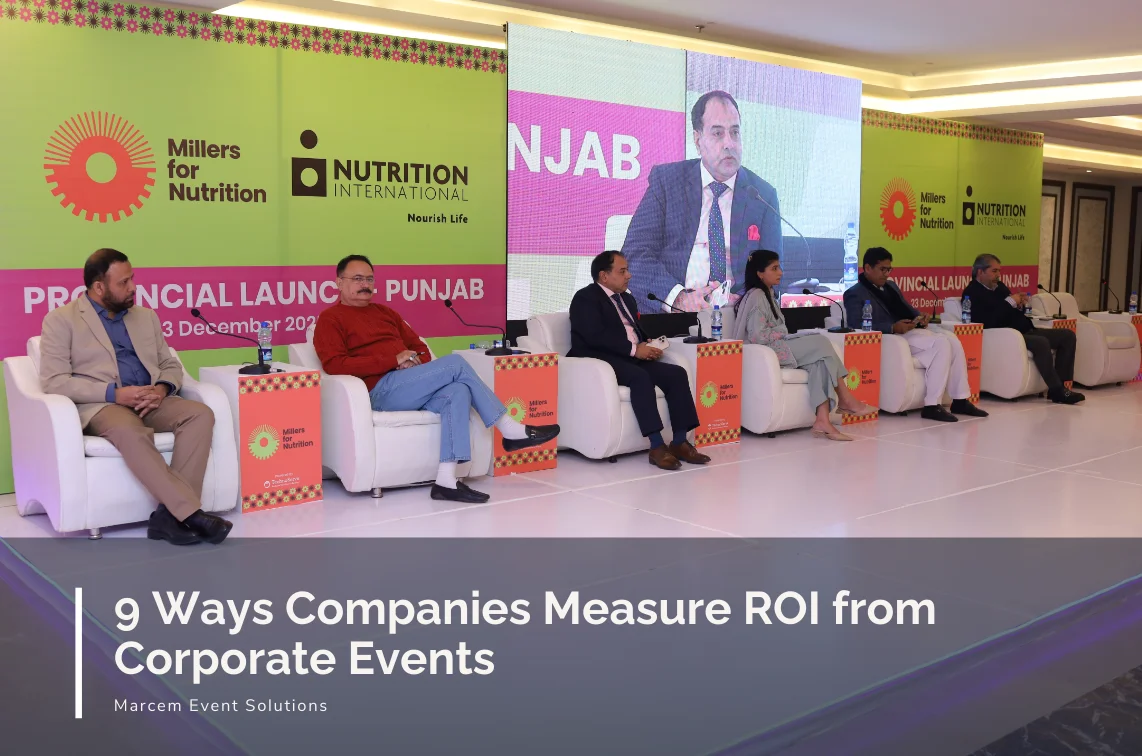
Corporate events aren’t just fancy get-togethers anymore; think beyond the cocktail hours and big ballrooms. These days, businesses pour serious money into them, and leadership wants hard proof it’s worth it.
Whether you’re running a high-level executive retreat, a trade show booth blitz, or rolling out a new product, the big question always comes back to: What’s the actual payoff?
ROI talk dominates event planning circles now. I’ve seen stats floating around that roughly 75% of marketers rank events as delivering the strongest returns compared to other channels, for B2B folks, especially, about 68% swear by live events as their top lead machine.
1. Straight-Up Lead Generation
The quickest gut check for most teams? How many solid leads came out of it?
Events pull in people who already care about your space; they’re not random scrollers. That makes them well-positioned to capture contacts who might actually buy or partner down the line.
What gets tracked usually includes:
- Fresh contacts scooped up
- Leads that qualify as real opportunities
- Actual meetings set on-site
- Early follow-ups kicked off right away
One stat I always come back to: close to half of attendees turn into qualified leads within a few months. No wonder events still punch above their weight in marketing mixes.
The smart move isn’t just stacking business cards—it’s spotting the prospects who can realistically slide into the sales funnel.
2. Actual Revenue Tied Back to the Event
Leads are nice, but closed-won deals are what pay the bills.
Sales teams tag these in the CRM: “Yeah, this $X deal started (or sped up) because of that conversation at the event.”
A basic formula lots of folks use: (Event-attributable Revenue – Total Event Cost) ÷ Event Cost
Picture this: Drop $120k on a conference, then trace $420k in won business back to it. Suddenly, the math looks pretty good.
From what I’ve seen in benchmarks, well-run, targeted events often hit 3:1 to 5:1 returns, especially when you’re talking to decision-makers who can say yes.
3. Pipeline Value (The Longer Game)
Not every deal closes fast; some drag on for months or even a couple of years.
That’s why many shift focus to pipeline impact: the total potential revenue sitting in new opportunities born from the event.
Quick example:
- Event cost: $100,000
- Qualified opps created: $700,000
- Rough potential ROI: 7:1
Sure, not everything converts, but this gives a clearer picture of future value created, not just what hit the books last quarter.
4. Brand Awareness and Perception Lift
Events let people experience the brand up close—no screen in between. That sticks better than another ad.
I’ve noticed research showing that around 74% of attendees walk away feeling more positive about the company.
Ways to measure this:
- Earned media pickup
- Spikes in social mentions
- Website traffic jumps around event dates
- Quick post-event surveys on brand recall
For big launches or thought-leadership summits, the press alone can rival what you’d pay for equivalent ad spend.
5. How Engaged People Actually Got

If folks are glued to sessions, asking questions, swapping stories at breaks—that’s a green flag the event landed.
Teams watch:
- Session turnout numbers
- How lively the Q&A gets
- App usage (polls, chats, downloads)
- Networking connections made
Engaged attendees convert better later. Plus, roughly 80% share stuff on social afterward, stretching your reach way beyond the venue walls.
6. Cost Per Lead (Efficiency Check)
Some borrow digital marketing lenses here.
Cost Per Lead = Total Event Spend ÷ Leads Collected
Say $80k event → 400 leads = $200 CPL.
Events look pricey next to paid ads at first glance, but the leads usually carry higher intent and close quicker thanks to that face-to-face trust factor.
7. Speeding Up the Sales Cycle
Nothing builds rapport like shaking hands and chatting over coffee.
In-person interactions cut through noise faster than endless email threads.
Some studies point to event-sourced leads shortening sales cycles by up to 30% in certain sectors.
Track it via:
- Days from event to close
- How many prospects jumped stages post-event
- Follow-up meeting volume
One good hallway chat can leapfrog a lead from “maybe someday” to “let’s talk terms.”
8. Bringing in Sponsorship Dollars
For bigger conferences, sponsors often foot a chunk of the bill—or more.
They love targeted audiences, and good events keep them coming back.
Key metrics:
- Sponsorship income total
- Number of partners onboard
- Renewal rates and satisfaction feedback
Plenty of major events count on sponsorships for over 70% of revenue. Done right, the whole thing flips from expense to break-even (or better).
9. The Stuff That Pays Off Way Later
Some wins don’t show up on dashboards for a long time.
Think:
- New strategic alliances
- Unexpected collaborations
- Insights picked up from off-script talks
- Deeper ties with major clients
I’ve heard execs say offhand comments at conferences sparked huge deals or shifts years down the road. Events quietly fuel long-game business growth.
Why Bother Measuring Any of This?
Events eat budget venues, travel, production, swag, the works. Companies can’t just hope for the best anymore; they need data to justify the spend.
The sharpest organizations don’t obsess over one number. They blend hard revenue, engagement signals, brand effects, and relationship momentum to get the full picture. That way, they keep investing in what actually delivers, and ditch what doesn’t.